

Transcranial Magnetic Stimulation
How It Works
THE PROCESS
Therapy tailored specifically for you
1
Free
Consultation
2
TMS Evaluation with Dr. Wolff
3
Initial Mapping Appointment
4
Begin TMS Treatment
A typical treatment course
At Shore TMS, we offer free initial screenings to determine if TMS is the right treatment for you. During this consultation, we’ll review your symptoms and treatment history and talk through the next steps in your care.
Our team is here to make the insurance process simple and stress-free. Once we determine that you are a candidate for TMS, we will handle the insurance process for you. We will work with your provider to ensure that coverage requirements are met and help you begin treatment as smoothly and efficiently as possible.
1
Free Consultation

Upon completion of your consultation, we will schedule an appointment for you to meet with Dr. Wolff for further evaluation and to discuss whether TMS is the right treatment for you.
2
TMS Evaluation with Dr. Wolff

Before treatment, it is important to determine the optimal delivery of magnetic pulses, so your first session may be slightly shorter as we map your brain and determine your motor threshold.
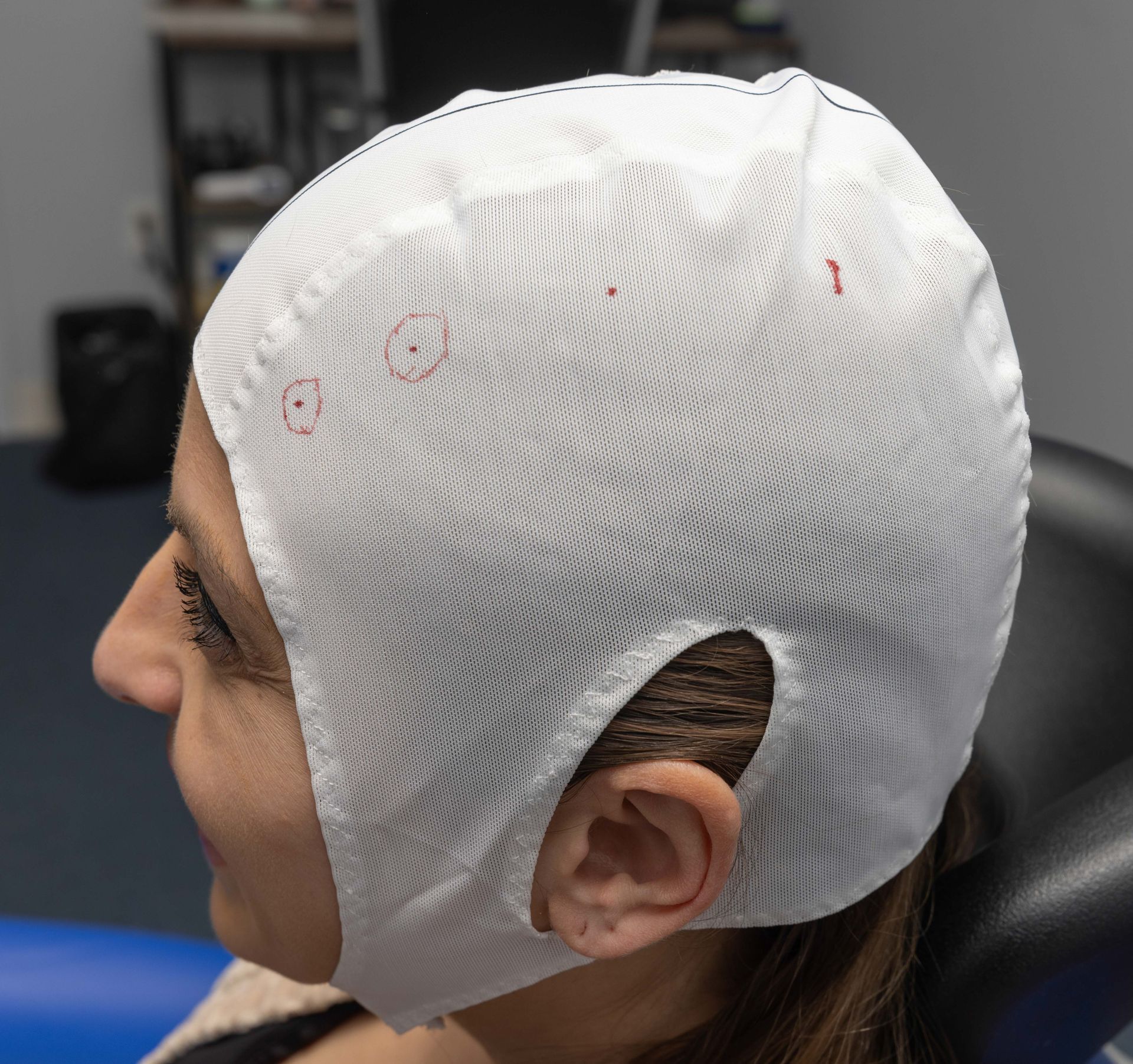
During this process, Dr. Wolff will work with our technicians to identify the appropriate placement and energy settings of the treatment coil. During this step, a magnetic pulse will be gently applied to determine the lowest level needed to produce a small, natural movement of the thumb or temple area. From there, the coil is moved forward to the left frontal lobe, specifically the dorsolateral prefrontal cortex (DLPFC), and the energy levels are then adjusted.
The benefit of this initial mapping is that it only needs to be done once. Each patient is provided with their own treatment cap to wear during every session.
3
Initial Mapping Appointment

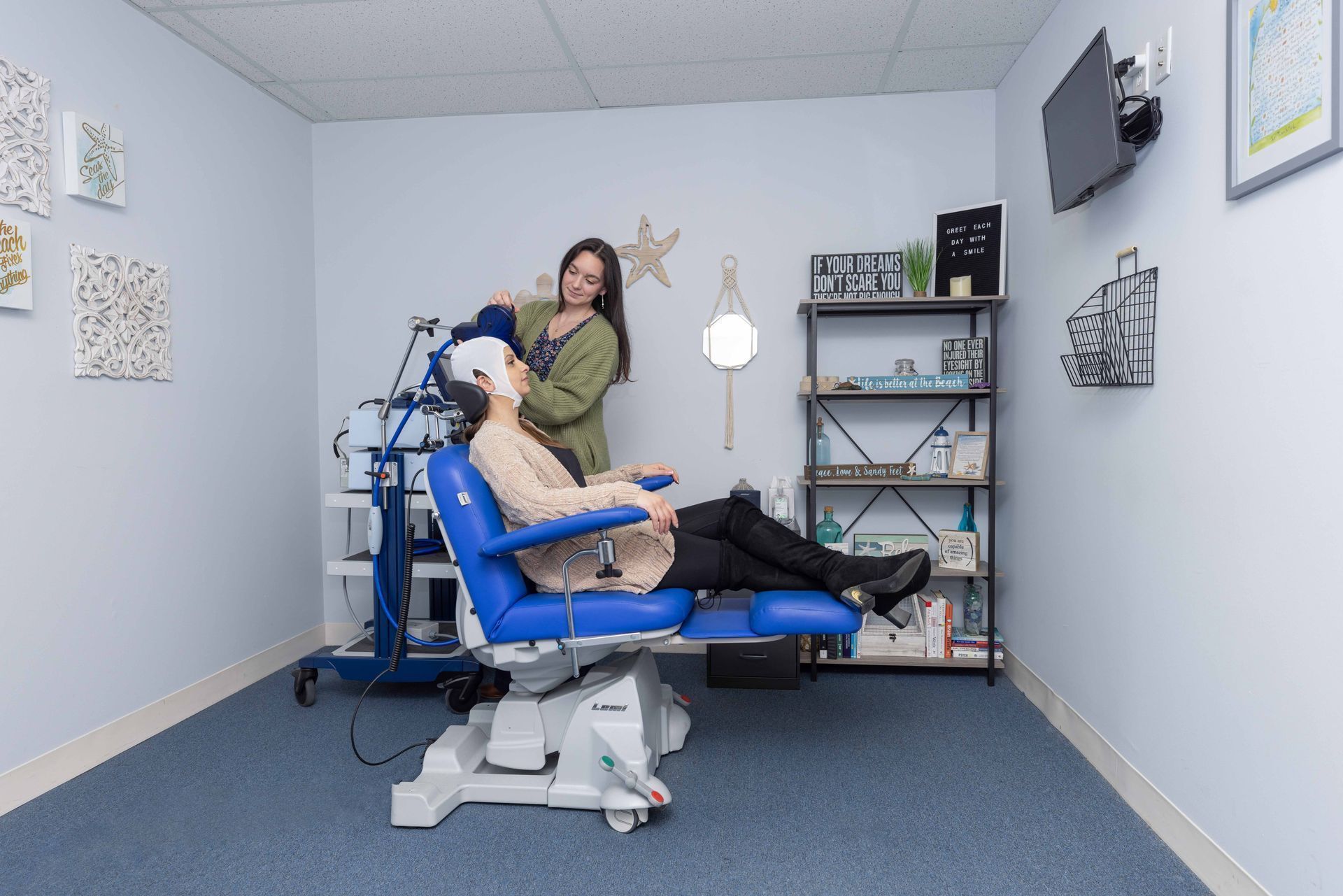
Sessions last about 37 minutes, while you sit comfortably in a reclined chair. You will remain alert while gentle magnetic pulses are delivered in short intervals (in 4-second cycles, repeated 2–3 times per minute). TMS is non-invasive and medication-free, so you can return to your normal activities when session has ended.
Your sessions will be guided by our trained TMS technicians, following a personalized plan developed by Dr. Wolff. Treatments are typically scheduled five days a week for about 4–6 weeks, though this may be adjusted based on your individual progress and response.
As you begin to feel better, your care may gradually taper to help maintain your progress. Throughout treatment, our team will regularly check in and adjust your plan based on how you’re doing. TMS is non-invasive and medication-free. You may return to your normal daily routines after session, including driving.
We encourage you to make your session your own – listen to music, talk with a member of our care team, or simply relax. You may also use our TV, practice mindfulness meditations, or bring your own entertainment.
4
Begin TMS Treatment

Is TMS for Me?
Am I a good candidate for TMS?
a. Do you suffer from Major Depressive Disorder?
b. Struggling to find relief despite trying antidepressants?
c. Or, struggling with side effects from antidepressants?
d. No current substance use or history of seizures?
e. If your answer is yes to more than one of the following questions, you may be a candidate for TMS.
What kind of equipment is used?
We use Magstim TMS equipment, which includes a treatment machine and coil
Is TMS Therapy safe?
TMS therapy is an FDA-approved, non-invasive treatment for depression. Our trained TMS technicians will administer it under the supervision of our prescribing psychiatrist. TMS is well-tolerated, with minimal risks and few side effects, making it one of the least invasive treatment options available.
What are the side effects of TMS?
Side effects are minimal. Some patients may experience mild discomfort at the treatment site or a slight headache during the first week, but these are typically temporary and improve as your body adjusts to the treatment.
The most serious risk of TMS is seizures. However, the risk of a seizure is exceptionally low, and a thorough check on a client’s medical history is conducted to rule out this risk
What is the difference between TMS and ECT?
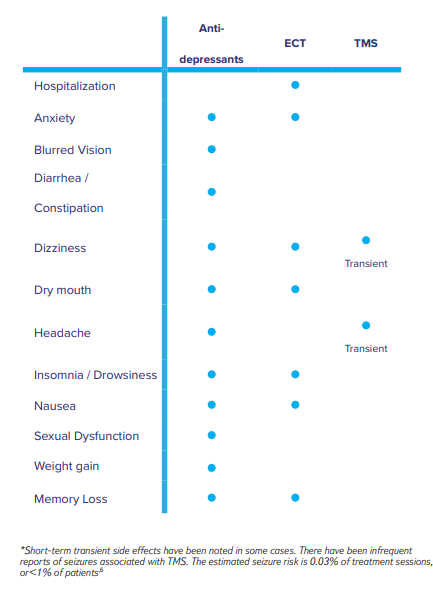
TMS is not your traditional shock therapy; it uses gentle magnetic pulses, not electricity. No anesthesia is required, so you’ll be awake, alert, and able to drive yourself to and from each session. Unlike ECT, TMS is easy on the body and does not carry the same risks of side effects such as memory loss.
Does TMS cause memory loss?
No! If anything, many patients report improvements in cognitive function during treatment.
How long do the TMS treatment results last?
Results can vary from person to person; however, in our office, about 80% of patients experience meaningful improvement with TMS.
Will my insurance cover TMS Therapy?
We work with most major insurance plans, including Medicare, Aetna, Cigna, UnitedHealthcare, and many Blue Cross Blue Shield plans. Our team handles the insurance authorization process for you, so you can focus on your care and feeling better.
What should I expect my first treatment?
Our office offers free consultations for those interested in learning more about TMS and become acquainted with the treatment process. Your consultation may last 15-30 minutes as you will meet our team, see the equipment, ask questions, and talk through any concerns. We’ll also provide helpful information about the treatment so you can feel informed and comfortable moving forward.
What happens after I complete my TMS treatment?
After completing the initial 30 TMS sessions, the final six are gradually tapered over about two weeks. We also offer optional maintenance sessions about two months after treatment has ended at a discounted rate for patients who may need continued support .
What clinical information is available on TMS?
TMS has been extensively studied and supported by reliable research. During your initial consultation, we’ll provide you with helpful articles and resources to help you learn more at your own pace. You can also explore trusted sources like:
Psychiatric Times
Mayo Clinic
Forbes
The National Library of Medicine for additional information.
How does the TMS treatment process work?
TMS treatment begins with a simple mapping session, where we identify the exact area of your brain to target and then determine the right threshold settings for you. From there, you’ll come in for regular sessions, five days a week, for about 6-7 weeks. Sessions are about 40 minutes long, during which gentle magnetic pulses are delivered while you sit comfortably and remain awake.
